Water mitigation and drying help in Cheyenne
Water mitigation is the scientific stabilization of indoor building materials following liquid intrusion. After standing water is removed, moisture remains trapped inside framing studs, drywall assemblies, and subfloor layers. Cheyenne Water Damage connects property owners with restoration contractors specializing in applied structural drying.
What is Applied Structural Drying?
When building materials are exposed to water, liquid is absorbed through porous cellular structures. Wood framing studs, oriented strand board (OSB), gypsum wallboard, and fiberglass insulation quickly reach fiber saturation. Simply opening windows or running domestic box fans is ineffective because surface evaporation stalls when ambient indoor humidity rises.
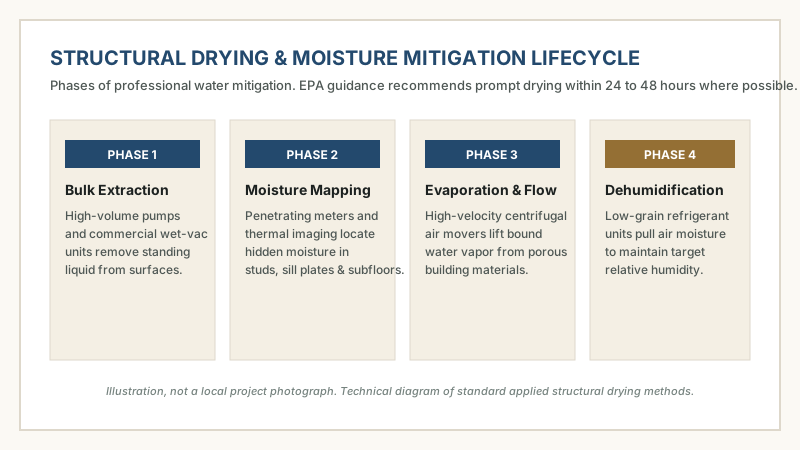
Applied structural drying uses controlled thermodynamic principles. Restoration professionals calculate the volume of the space, evaluate the specific moisture content of saturated assemblies, and create a balanced drying chamber using high-velocity air movers and industrial dehumidification units.
The Three Phases of Complete Water Restoration
To understand where mitigation fits into property recovery, consider the three distinct operational phases:
Water Extraction
Mechanical evacuation of standing pools of water from floor surfaces using commercial pumps and suction wands. See our Water Removal Page for details.
Structural Mitigation & Drying
Evaporating deeply bound moisture, monitoring ambient psychrometric readings, and drying framing to established baseline dry standards to prevent decay.
Structural Reconstruction
General carpentry, drywall patching, priming, painting, and reinstalling flooring. Reconstruction is handled by general building contractors after materials are certified dry.
How Restoration Contractors Monitor Moisture Progress
Proper water damage mitigation relies on objective instrumentation rather than visual guesswork. When an independent restoration contractor arrives at your Cheyenne home, they utilize diagnostic tools:
- Non-Invasive Moisture Meters: Radio-frequency meters assess moisture depth beneath ceramic tile, vinyl flooring, and finished wood without damaging surfaces.
- Penetrating Pin Probes: Calibrated electrical resistance probes measure exact moisture percentage inside wall plates, subfloors, and framing lumber.
- Thermal Imaging Cameras: Infrared thermography identifies evaporative cooling patterns, pinpointing hidden water travel behind baseboards and inside ceiling cavities.
- Thermo-Hygrometers: Handheld digital sensors measure ambient temperature, relative humidity (RH), and grains per pound (GPP) of water vapor in the air to verify that dehumidifiers are running efficiently.
Prompt Drying and the EPA 24 to 48-Hour Guidance
According to publication guidance from the U.S. Environmental Protection Agency (EPA), water-damaged indoor materials should be dried thoroughly and promptly, commonly within 24 to 48 hours where possible, to inhibit unwanted mold growth.
Important Mold Caution
While the EPA emphasizes the 24 to 48-hour benchmark for prompt response, microbial growth is governed by multiple variables—including ambient temperature, relative humidity, spore presence, and organic nutrient availability. There is no universal "mold clock" that guarantees zero growth prior to hour 48, nor does drying guarantee an environment will remain perpetually mold-free. Cheyenne Water Damage does not offer mold remediation campaigns or health diagnoses; we connect callers with restoration professionals who mitigate moisture to help protect structural integrity.
Need Structural Drying Help in Cheyenne?
Call our 24/7 telephone referral line. Representatives connect you with available restoration specialists serving Laramie County.
Referral service. We do not perform restoration work. Availability and job scope vary.
Explore Connected Restoration Disciplines
Water mitigation frequently overlaps with other property damage scenarios. Explore related resources across our website:
- Emergency Water Removal: The preceding extraction phase for standing liquid.
- Storm & Flood Cleanup: Drying and sanitization following exterior storm water entry.
- Basement Water Removal: Mitigation for below-grade concrete slabs and crawl spaces.
- Services Directory: Complete overview of all restoration referral offerings.
- Contact Page: Non-emergency service inquiry form and 24/7 telephone details.
Frequently Asked Questions: Water Mitigation
How long does the structural drying process typically take?
Most residential water mitigation projects require between 3 and 5 days of continuous industrial drying, depending on the density of materials, humidity levels, and whether water penetrated multiple floor levels. Contractors measure moisture daily until materials reach normal dry standards.
Should I leave drying equipment running overnight?
Yes. Industrial air movers and commercial dehumidifiers are designed for continuous 24-hour operation. Turning equipment off prematurely allows trapped moisture to migrate into cooler structural cavities, prolonging the drying timeline.
Can drywall be saved after getting wet?
Drywall exposed to clean water can often be dried in place if addressed promptly before the gypsum core sags or crumbles. However, drywall contaminated by sewage or outdoor floodwaters must be removed (typically cut out at least two feet above the high-water line) for sanitary reasons.
Does Cheyenne Water Damage guarantee specific contractor arrival times?
No arrival time is guaranteed. Contractor availability varies based on workload, time of day, severe weather events across Cheyenne, and travel distance to your property.
Agency Guidelines & Technical References
Information regarding Cheyenne weather patterns, municipal flood zones, and indoor moisture control on this page is grounded in the following public agency records:
- [S9]CDC Centers for Disease Control and Prevention — Reentering Your Flooded Home Safety: Safety protocols addressing electrical risks, standing water contamination, structural hazards, and portable generator safety.
- [S10]US Environmental Protection Agency (EPA) — Mold Course Chapter 4: Prevention and Control: EPA guidance recommending prompt drying of water-damaged materials, typically within 24 to 48 hours where possible.
- [S11]US Environmental Protection Agency (EPA) — A Brief Guide to Mold, Moisture, and Your Home: Information on moisture control, proper containment, personal protection, and cleaning procedures.
Citations are provided for public educational context. Government agencies and nonprofit organizations listed do not endorse this referral website or associated contractors.